

The Ramman Festival is an ancient and vibrant ritual-theatre celebration observed by the Garhwali community in the twin villages of Saloor and Dungra in the Chamoli district of Uttarakhand.
It has been recognized by UNESCO as part of the Intangible Cultural Heritage of Humanity, highlighting its significance as a living tradition.
The festival is dedicated to the village deity, Bhumiyal Devta, and beautifully combines religion, folklore, music, storytelling, and community participation.
 Join Now
Historical Significance of Ramman Festival
The origins of the Ramman Festival trace back to the era of the Ramayana. It is associated with the spread of Vaishnavism in the Garhwal region after the establishment of the Badrinath Temple.
During this period, saints and devotees narrated the stories of Lord Rama, which became the foundation of this unique theatre-based ritual.
Local people also believe that the Yakshas (nature spirits) are forms of Hanuman, and the tradition of narrating Hanumankatha became deeply rooted in their culture.
Ramman Festival Date and Duration
Ramman Festival Date 2026
The Ramman Festival in 2026 is expected to take place in the latter half of April, usually falling nine to eleven days after the Baisakhi festival.
Since Baisakhi in 2026 will be celebrated on 14th April, the Ramman Festival is likely to be observed around 23rd April or 25th April, 2026.
The village priest decides the exact date. Although the main event lasts for a day, the rituals and preparations begin weeks in advance.
Ramman Festival Rituals and Celebrations
Procession of the Deity
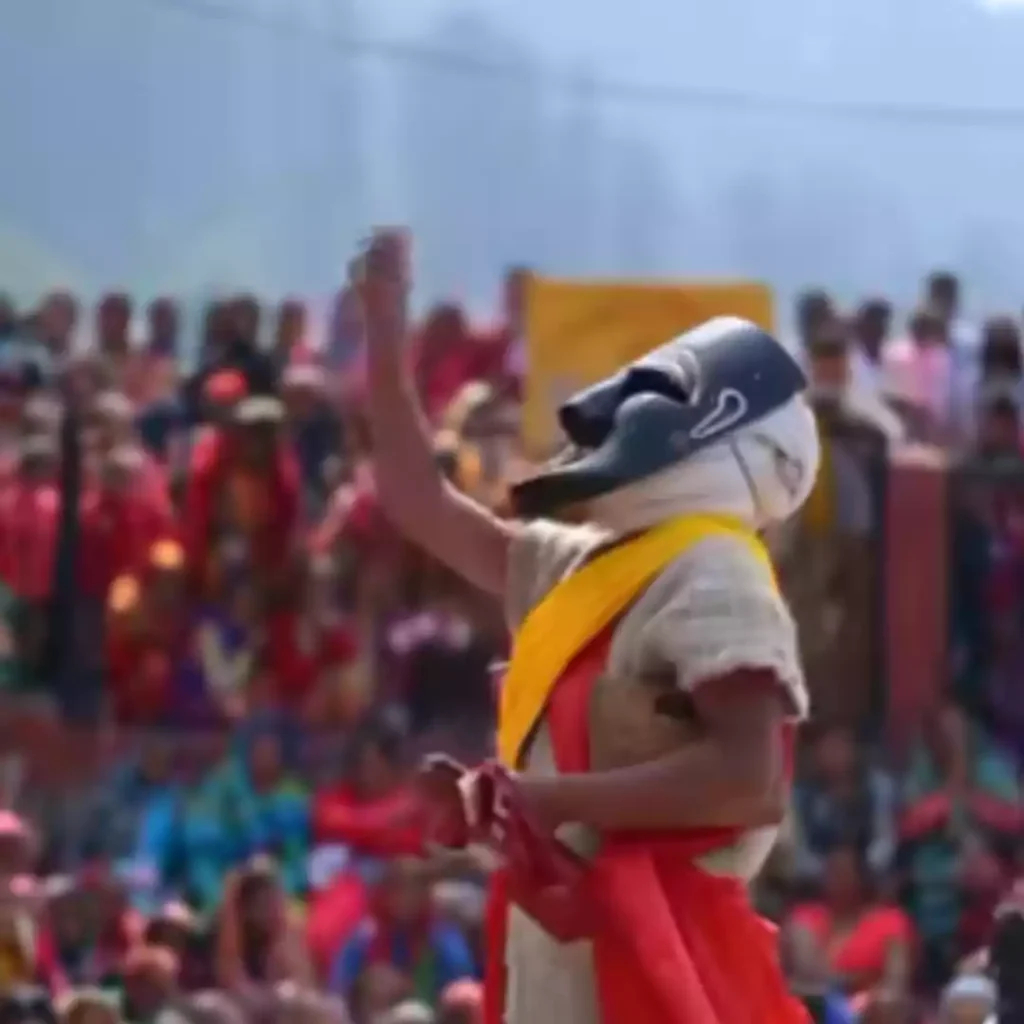
A major highlight of the festival is the grand procession of the village deity, Bhumiyal Devta, who is carried from his temple through the village accompanied by drums, chants, and masked dancers.
After the celebration, the deity is placed in a chosen family’s house for a year, where daily rituals and offerings continue.
Folk Theatre: Storytelling through Dance and Music
At the heart of Ramman lies the folk theatre, where episodes from the Ramayana and local legends are performed.
The festival features 18 distinct characters, each represented with a mask, performing 18 dance beats totaling 324 steps – symbolizing the 18 Puranas.
Traditional Garhwali instruments like the dhol and damau add rhythm to the performances. The narrative form used is called Jaagar, which blends devotion and storytelling.
Amazing Masked Performances
The masks used in Ramman are carved from Himalayan birch wood (bhojpatra) and are treated as sacred objects.
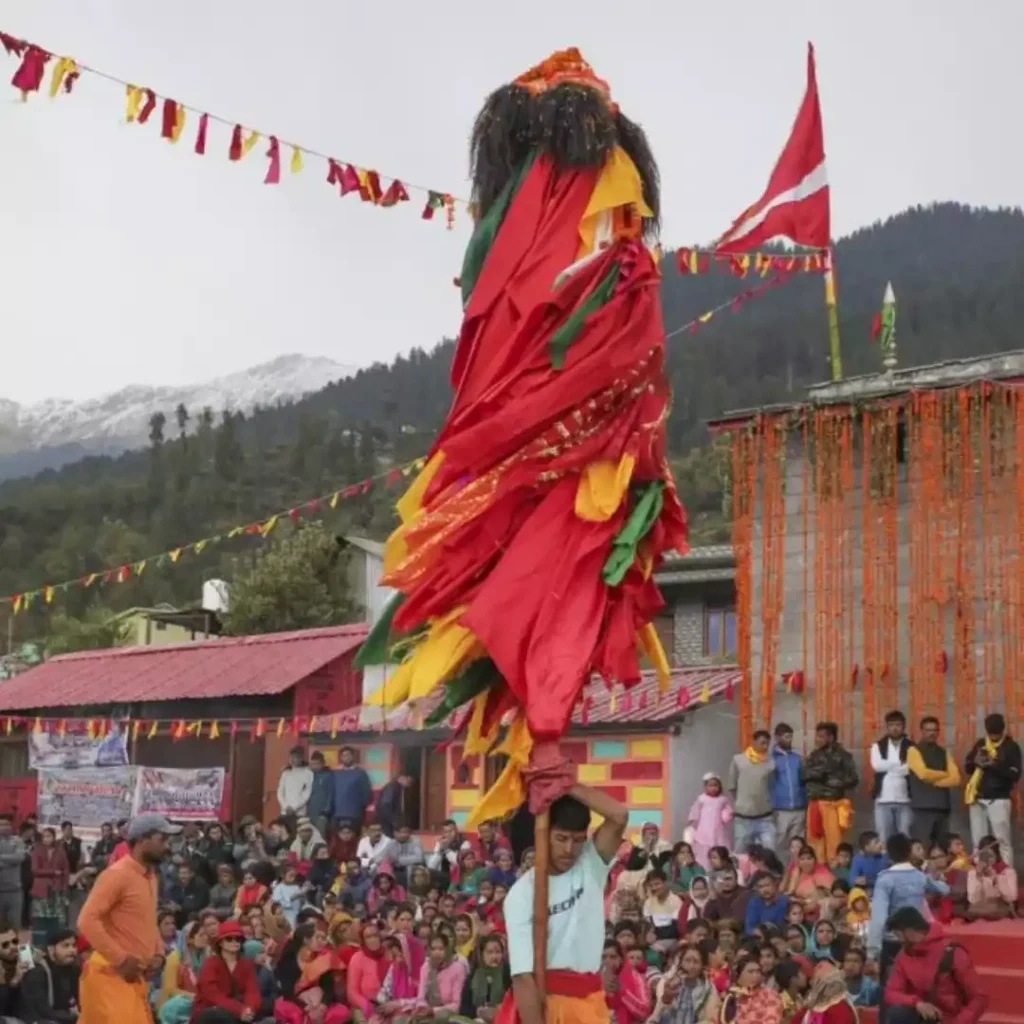
The most important mask is of Narsingh Devta, worn only by members of the Bhandari community. Each dance sequence has symbolic meaning, blending mythology and everyday life.
Some key performances include:
- Ganesha and Kalinki Dance – Invokes Lord Ganesha and Goddess Parvati.
- Sun God Dance – Represents the creation of the world and birth of deities like Brahma and Ganesha.
- Bar Deva (Naradmuni) Dance – Features mythological figures like Gopi Chand and Rani Radhika.
- Mwar-Mwarin Dance – A story about a herdsman attacked by a tiger, symbolizing human struggle.
- Baniya-Baniyayain Dance – Portrays a merchant couple robbed on their journey, reflecting life’s challenges.
- Bharat-Milaap – The emotional reunion of Lord Rama and his brother Bharat.
Community Involvement
The Ramman Festival is a collective effort of the entire village. Brahmin priests conduct rituals, Baaris collect funds, Dhaaris coordinate events, and drummers from the Das community provide musical accompaniment.
The storytellers, known as Jaagars, narrate mythological tales. This teamwork strengthens social bonds and preserves the essence of unity.
Why Visit the Ramman Festival?
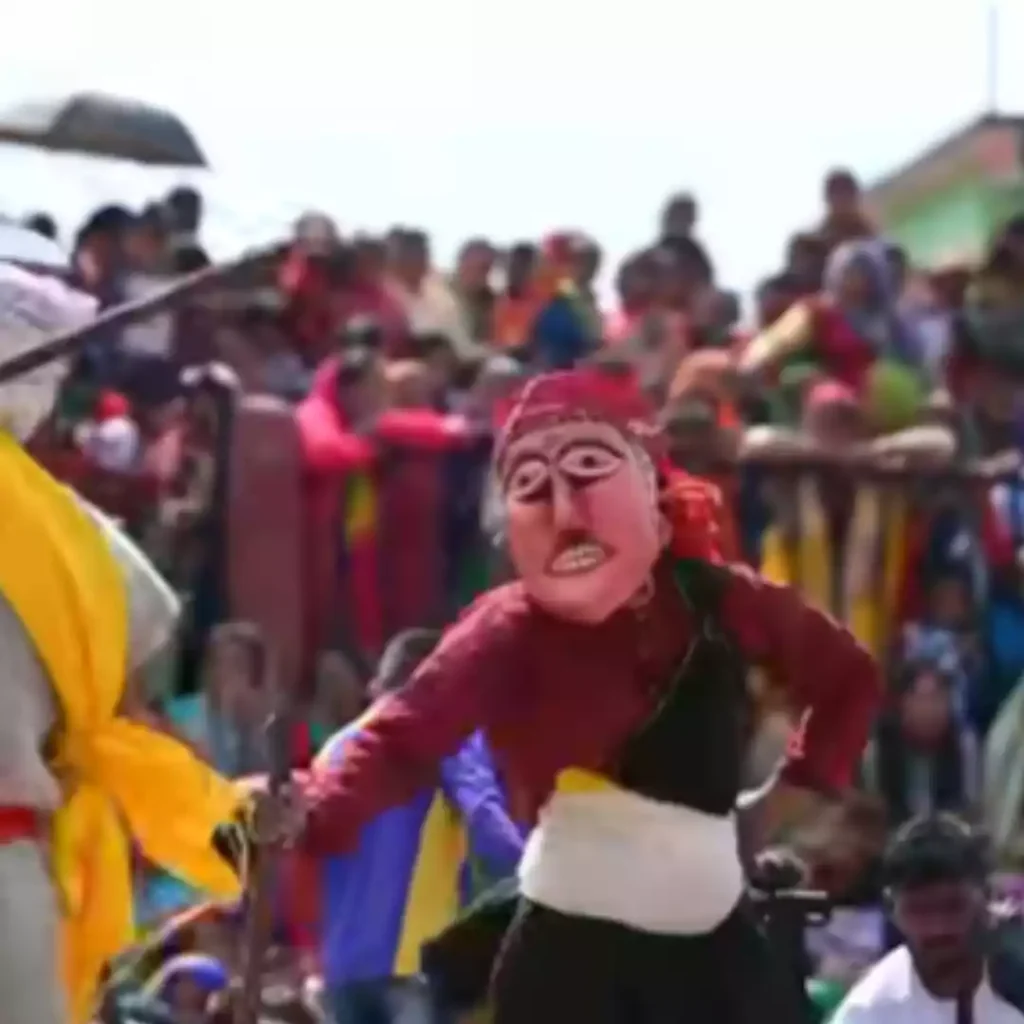
- Cultural Experience – It’s a rare opportunity to witness authentic Garhwali customs and ancient ritual-theatre.
- Vibrant Art Form – The colorful costumes, rhythmic dances, and storytelling bring mythology to life.
- Community Spirit – The festival offers a close look at the communal harmony of Himalayan villages.
- Scenic Beauty – The twin villages of Saloor and Dungra lie amidst breathtaking Himalayan landscapes.
Preservation Efforts and Challenges
Despite its cultural richness, the Ramman Festival faces several challenges:
- The sacred birch wood used for mask-making is becoming scarce.
- The festival remains largely unknown outside Uttarakhand, limiting awareness and support.
- Younger generations are migrating to cities, leading to a decline in local participation.
- Most knowledge is passed down orally, putting the tradition at risk of being forgotten.
How to Reach Saloor-Dungra
By Flight:
The nearest airport is Jolly Grant Airport in Dehradun, about 263 km away. From there, one can take a taxi or bus to Joshimath and then a local jeep to the villages.
By Train
The nearest railway station is in Rishikesh, around 248 km away. From Rishikesh, buses and taxis are available to Joshimath.
By Road
Saloor-Dungra is approximately 300 km from Dehradun. Buses and taxis operate regularly up to Joshimath, and the villages are just a short drive from there.
Conclusion
The Ramman Festival is more than a cultural event. It is a living expression of faith, folklore, and community life in the Garhwal Himalayas with its mix of spirituality, storytelling, and dance.
It serves as a bridge between the past and present. Experiencing this festival means witnessing a tradition that continues to thrive through devotion and togetherness.
FAQ:
Q. Where and when is the Ramman Festival held?
The Ramman Festival, inscribed in the UNESCO Representative List of the Intangible Cultural Heritage of Humanity, is celebrated in Uttarakhand.
It takes place annually in late April, after the harvest season, in the twin villages of Saloor-Dungra.
Q. What is the main purpose of celebrating the Ramman Festival?
The Ramman Festival is celebrated to honor Bhumiyal Devta, the guardian deity of the Saloor and Dungra villages in Uttarakhand.
It combines religious devotion, cultural performances, and folk theatre to express gratitude for protection, good harvests, and community well-being.
Q. Who participates in the Ramman Festival?
Every family in the villages contributes in some way. Brahmin priests perform the rituals, Das community drummers play traditional instruments, Jaagars (folk storytellers) narrate the mythological tales, and others assist in organizing, funding, and performing.