

Pongal is a major harvest festival celebrated primarily in Tamil Nadu (India) and among Tamil communities around the world. It is a time when people give thanks for the harvest of crops, the Sun, animals, and nature.
Pongal, often called the “Festival of Boiling Over,” symbolizes prosperity and the overflowing bounty of nature. Tamil communities around the world gear up for one of the most vibrant and heartfelt festivals of the year.
Falling in mid-January, this ancient harvest celebration is more than just a break from routine. It is a heartfelt thank-you to the sun, the earth, and the tireless hands that bring food to our tables.
 Join Now
Pongal 2026 Date
Pongal is observed around 14th January. The festival spans four days, from 14th to 17th January inclusive, according to most calendars.
Day 1: Bhogi Pongal – 14th January 2026 (Wednesday)
Day 2: Thai Pongal or Surya Pongal – 15th January 2026 (Thursday)
Day 3: Mattu Pongal – 16th January 2026 (Friday)
Day 4: Kaanum Pongal – 17th January 2026 (Saturday)
How to Celebrate Pongal 2026
1. Decorate your home with kolam or rangoli at the entrance.
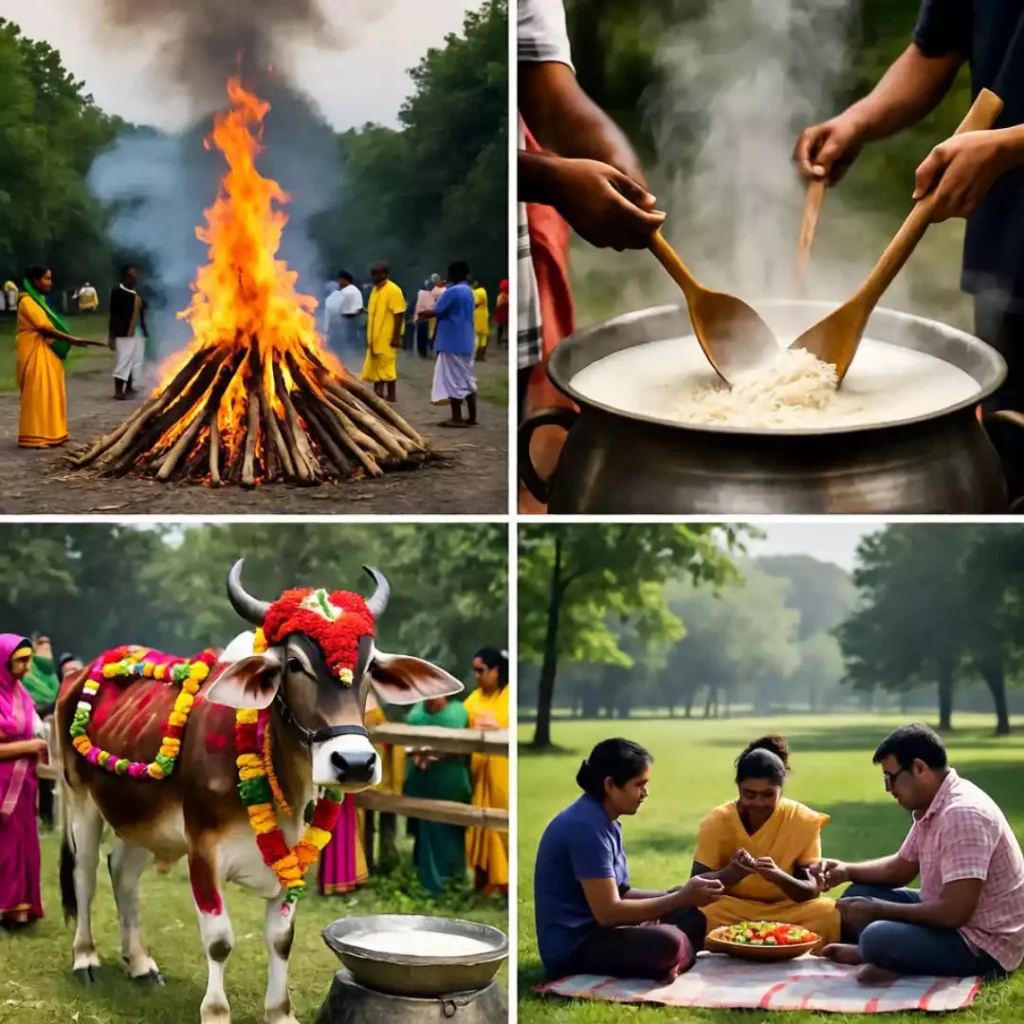
2. On Thai Pongal day, cook the special dish (rice + jaggery + milk) and offer it with devotion.
3. Draw a simple kolam and set up a mini altar with sunflowers and fruits.
4. Take a new dress in traditional clothes for the main day.
5. On Mattu Pongal, show appreciation to your pets or farm animals, or even if you don’t have them, just symbolically acknowledge nature’s help.
6. On Kaanum Pongal, spend time with loved ones—visit, share sweets, send greetings.
7. Donate to farmers’ funds or plant a tree as your “Pongal pledge.”
8. Stream live Jallikattu from Madurai or join online recipe swaps.
9. At the end with a sunset picnic and toasting to growth.
If travel calls, head to Tamil Nadu’s temple towns like Thanjavur for authentic vibes, or Coimbatore for fusion food trails.
Why is Pongal Celebrated?
- The festival marks the sun’s northward journey (Uttarāyaṇa) and the end of the winter period, which is considered auspicious in Hindu astronomy.
- It is primarily a thanksgiving festival: to the sun (Surya), to nature, to farm animals, and to the land for a good harvest.
- It strengthens relationships: families come together, neighbours share food, and social bonds are renewed.
Important Days of Pangol and Rituals
Day 1 – Bhogi Pongal
- Homes are cleaned, decorated with rangoli (kolam) and mango leaves.
- A bonfire is lit in early morning using old household items – symbolising letting go of the past and welcoming new beginnings.
Day 2 – Thai Pongal (Surya Pongal)
- The main day of the festival. Families wake early, wear new clothes, and prepare the dish called “Pongal” (rice + milk + jaggery) in a new clay pot.
- Offerings are made to the Sun God and farmers thank nature for the harvest.
Day 3 – Mattu Pongal
- A day dedicated to cattle (cows and bulls) because of their role in farming. Animals are bathed, decorated and honoured.
- In some places, traditional games and cattle-related events are held.
Day 4 – Kaanum Pongal
- A social day. People visit relatives, exchange greetings, share meals and enjoy family time.
- Some also treat this day as a day of relaxation, picnics or leisure.
Significance of Pongal Festival
Pongal is not just a harvest festival. It is a celebration of gratitude, nature, and life’s abundance.
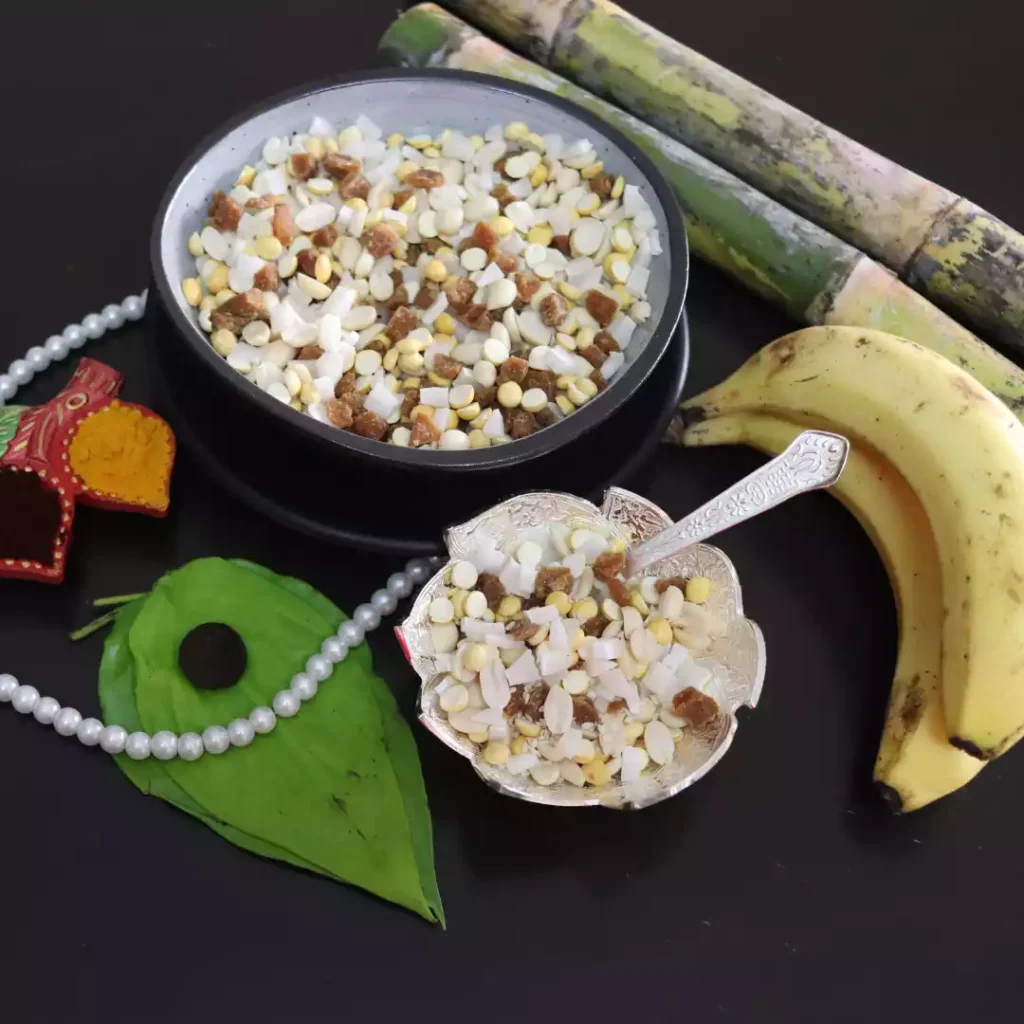
It marks a time when people thank the Sun, Earth, rain, and all living beings that help in growing food. Let’s explore its deeper meaning and importance.
Thanksgiving to Nature
The main significance of Pongal lies in expressing gratitude to nature. Farmers thank the Sun God (Surya), Mother Earth (Bhumi Devi), and cattle for helping them produce a rich harvest.
The word “Pongal” means “to overflow,” symbolizing abundance and prosperity.
Celebration of the Harvest
Pongal marks the end of the winter season and the beginning of the new harvest season. It’s the time when crops like rice, sugarcane, and turmeric are ready to be harvested.
The festival celebrates the joy of hard work and the success of the harvest.
Symbol of New Beginnings
Pongal is celebrated in the Tamil month of Thai, which is believed to bring hope, prosperity, and positive changes.
There’s even a Tamil saying – Thai pirandhaal vazhi pirakkum. Its meaning is “When the month of Thai begins, new opportunities open up.”
This reflects the belief that Pongal brings good luck, growth, and fresh starts in everyone’s life.
Respect for Animals
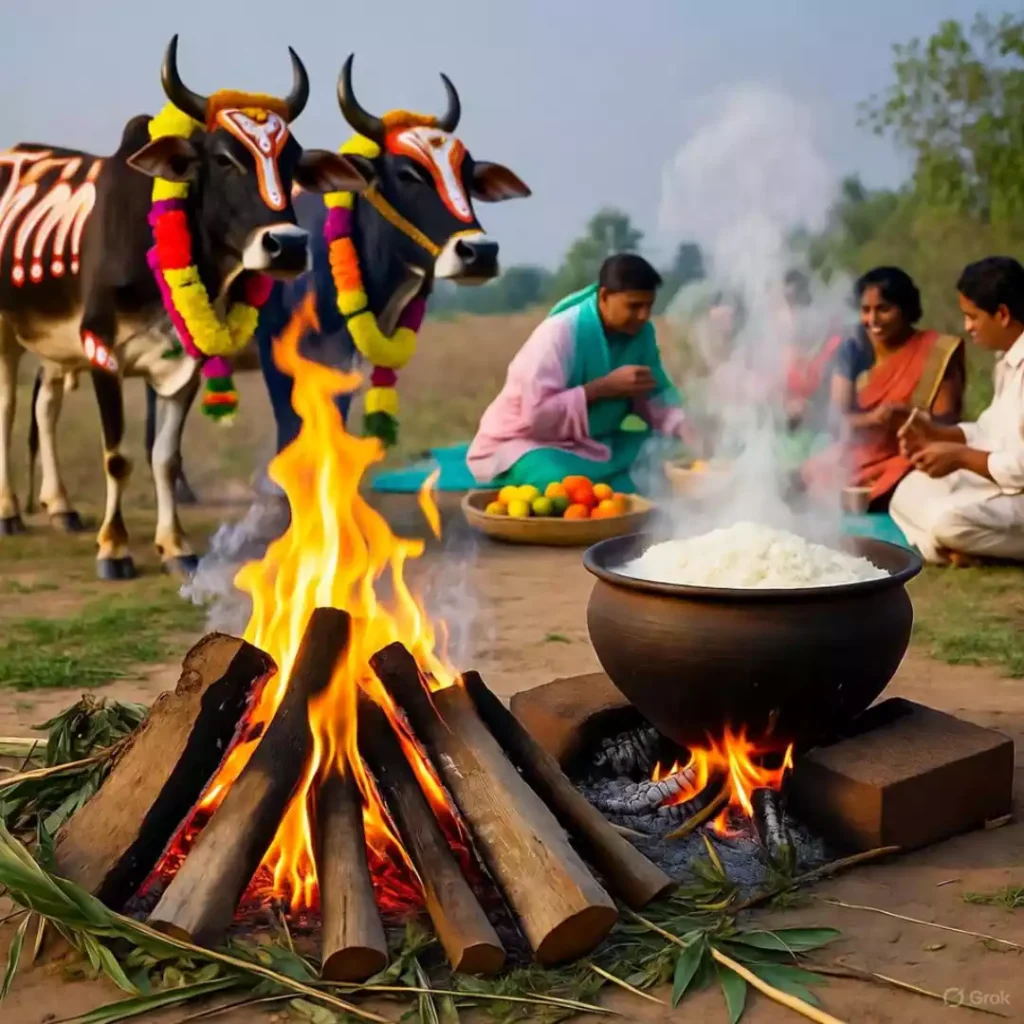
Cows and bulls play a crucial role in agriculture – they help plough the fields and transport harvests. On Mattu Pongal, people honor these animals by washing, decorating, and feeding them.
This shows respect for all living beings and the harmony between humans and nature.
Strengthening Family and Community Bonds
Pongal is also a time for family gatherings and social harmony. People clean and decorate their homes, wear new clothes, and share sweets and meals with neighbors.
It brings a sense of unity, love, and togetherness, reminding everyone of the importance of community.
Spiritual Significance
Pongal coincides with Makar Sankranti, when the Sun begins its northward journey (Uttarayan).
This is considered a highly auspicious phase in Hindu tradition that consists of spiritual growth, light and positivity. It represents the victory of warmth and brightness over darkness.
Reminder of Gratitude and Simplicity
In today’s fast-paced world, Pongal reminds us to pause and be thankful – for food, family, health, and nature.
The festival teaches us that true happiness lies in contentment, hard work and appreciation for what we already have.
| Aspect | Significance |
|---|---|
| Nature | Gratitude to the Sun, Earth, and Rain for the harvest |
| Harvest | Celebration of abundance and prosperity |
| Animals | Respect for cows and bulls who aid in farming |
| Spirituality | Marks the Sun’s northward movement – symbol of light and positivity |
| Family & Society | Strengthens relationships and community harmony |
| Life Lesson | Teaches gratitude, simplicity, and hope |
Things to Keep in Mind
1. Even if you’re not a farmer, you can participate in the spirit of the festival: cook the dish, decorate your home, invite someone over.
2. Respect the cultural traditions: The cooking of the Pongal dish in a clay pot, offering it with sincerity.
3. Enjoy responsibly: If you are part of public events with animals (on Mattu Pongal), ensure that the animals are treated kindly.
Pongal 2026 is more than a four-day festival. It is a moment to pause, to thank nature for renewing bonds and to celebrate life’s abundance.
If you take part with sincerity, you’ll experience warmth, joy and a sense of belonging – that is the true essence of Pongal.
Trending FAQ:
Q. Is Pongal only for farmers?
No. While its roots are in agriculture, everyone can join in the celebration.
Q. Is it just in Tamil Nadu?
It is most prominently celebrated in Tamil Nadu, but Tamil communities worldwide mark it.
Q. What dish is central?
The dish “Pongal” is the recipe of boiled rice with milk and jaggery and it is symbolic of abundance.