
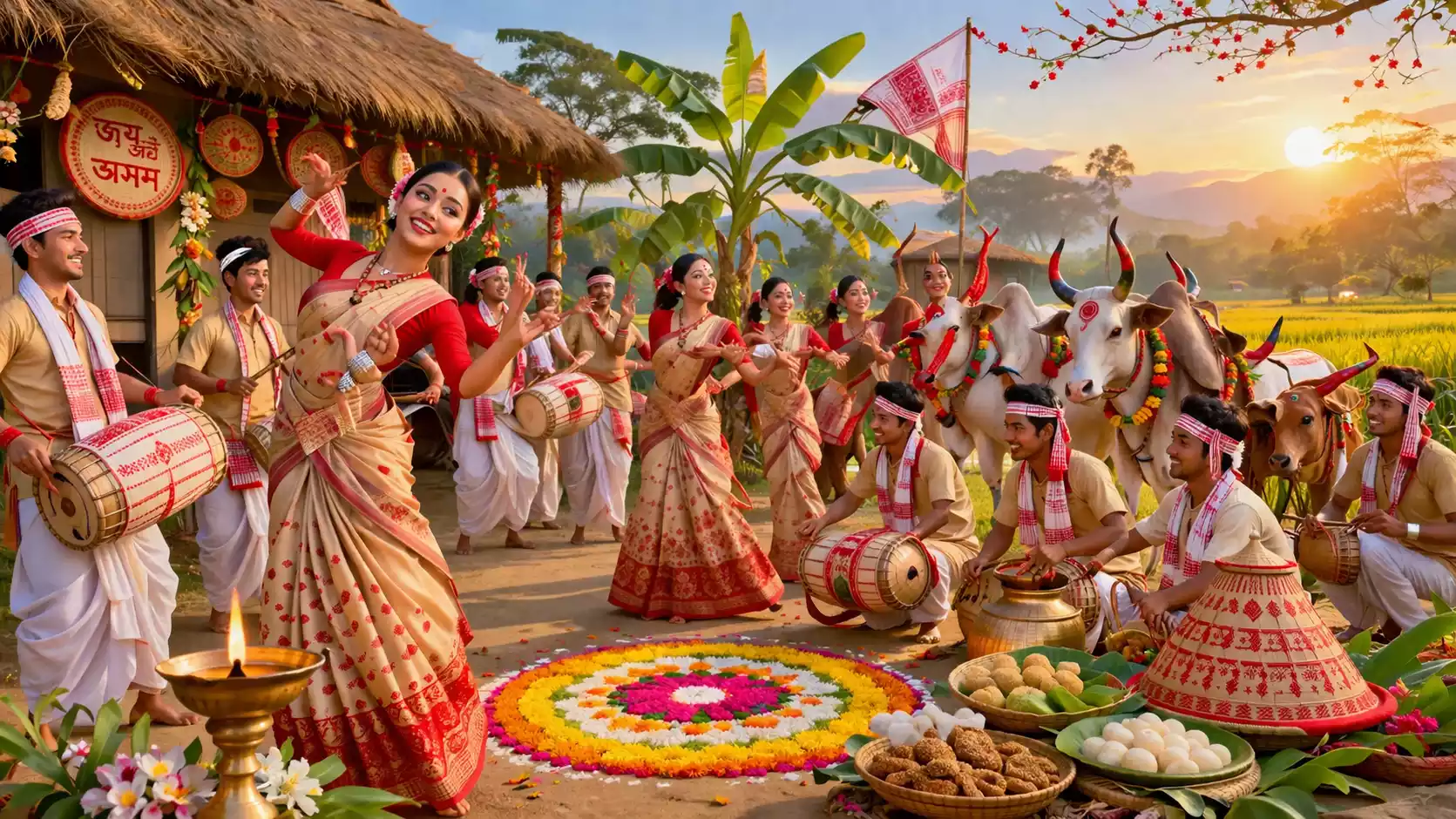
Bohag Bihu 2026, also known as Rongali Bihu, is one of the most vibrant and culturally rich festivals celebrated in Assam.
Marking the Assamese New Year and the arrival of spring, Bohag Bihu symbolizes joy, prosperity, agriculture, and new beginnings.
This festival is deeply rooted in farming traditions and celebrates the start of the sowing season, making it one of the most important harvest festivals in India.
It is filled with Bihu dance, traditional music, feasting, and community bonding, creating a joyful atmosphere across the region.
Bohag Bihu 2026 Date
Bohag Bihu 2026 will be celebrated over multiple days:
- Festival Duration: 14 April to 20 April 2026
- Start Day: Tuesday
- End Day: Monday
This multi-day celebration marks the beginning of the Assamese calendar year and is observed with devotion.
Bohag Bihu Festival Date on 2027 and 2028
| Year | Date | Day | Holiday | States |
|---|---|---|---|---|
| 2027 | 14 Apr | Wed | Bohag Bihu | AR & AS |
| 15 Apr | Thu | Bohag Bihu Holiday | AR & AS | |
| 2028 | 14 Apr | Fri | Bohag Bihu | AS |
Bohag Bihu 2026 Overview
- Festival Name: Bohag Bihu / Rongali Bihu
- Region: Assam & Northeast India
- Significance: Assamese New Year & Spring Festival
- Duration: 7 Days
- Main Theme: Agriculture, Renewal, Happiness
What is Bohag Bihu?
Bohag Bihu is the most important among the three Bihu festivals – celebrated to mark the arrival of spring and the beginning of a new agricultural cycle.
It is associated with:
- New beginnings
- Cultural celebrations
- Gratitude for nature
People celebrate by wearing traditional clothes, preparing special foods, and performing the famous Bihu dance, accompanied by instruments like dhol and pepa.
Why Bohag Bihu is So Important?
Bohag Bihu is more than just a festival—it is a cultural identity of Assam.
Key Significance:
- Marks the Assamese New Year
- Celebrates spring season and fertility
- Honors agriculture and farmers
- Promotes unity and social bonding
It also coincides with other Indian festivals like Baisakhi, Vishu, and Tamil New Year, showing its national importance.
7 Days of Bohag Bihu Festival (Complete Guide)
Bohag Bihu is popularly known as a 7-day festival, each day having its own rituals and meaning:
Day 1: Goru Bihu
- Dedicated to cattle (important for farming)
- Animals are bathed, decorated, and worshipped
Day 2: Manuh Bihu
- Celebrated for humans
- People wear new clothes
- Seek blessings from elders
Day 3: Gosain Bihu
- Worship of gods and deities
- Prayers for prosperity
Day 4: Kutum Bihu
- Visiting relatives and friends
- Sharing food and happiness
Day 5: Senehi Bihu
- Celebrates love and relationships
Day 6: Mela Bihu
- Cultural programs, fairs, and performances
Day 7: Chera Bihu
- Marks the end of festivities
- Reflection and blessings for future
These celebrations may vary slightly by region but maintain the same festive spirit.
Bohag Bihu Rituals & Traditions
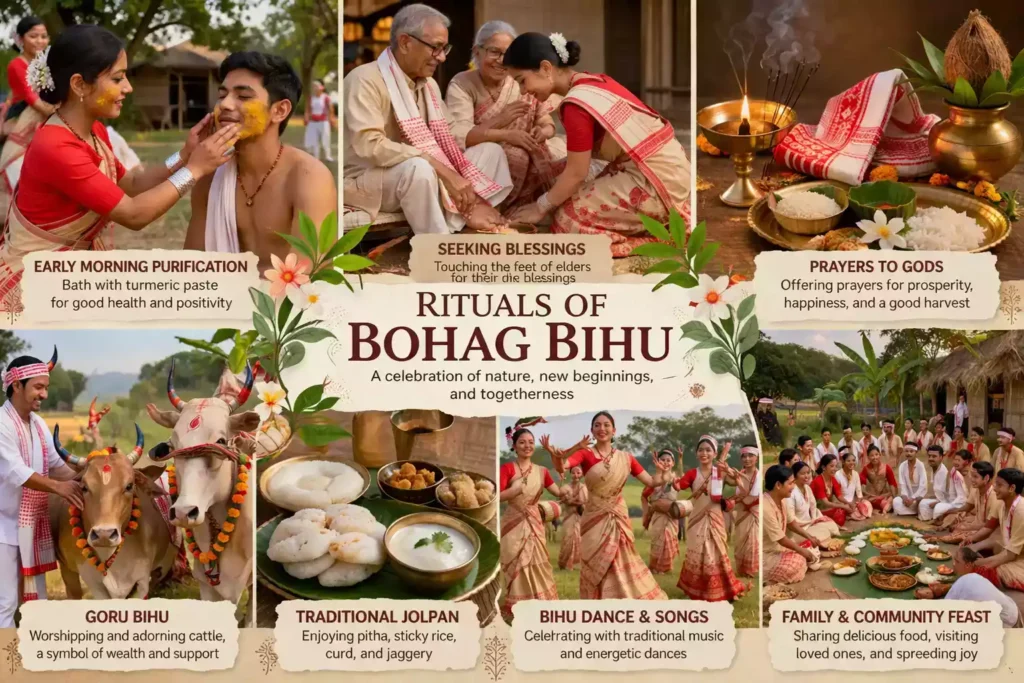
Morning Rituals
- Early morning bath with turmeric and herbs
- Wearing traditional attire
Exchange of Gamusa
- A symbolic cloth representing respect and culture
Traditional Foods
- Pitha (rice cakes)
- Jolpan (rice-based breakfast)
- Curd and jaggery
Bihu Dance & Music
- Performed in open fields and villages
- Celebrates youth, love, and joy
Bohag Bihu Celebrations in Assam
The festival is celebrated with full enthusiasm in cities like:
- Guwahati
- Dibrugarh
- Jorhat
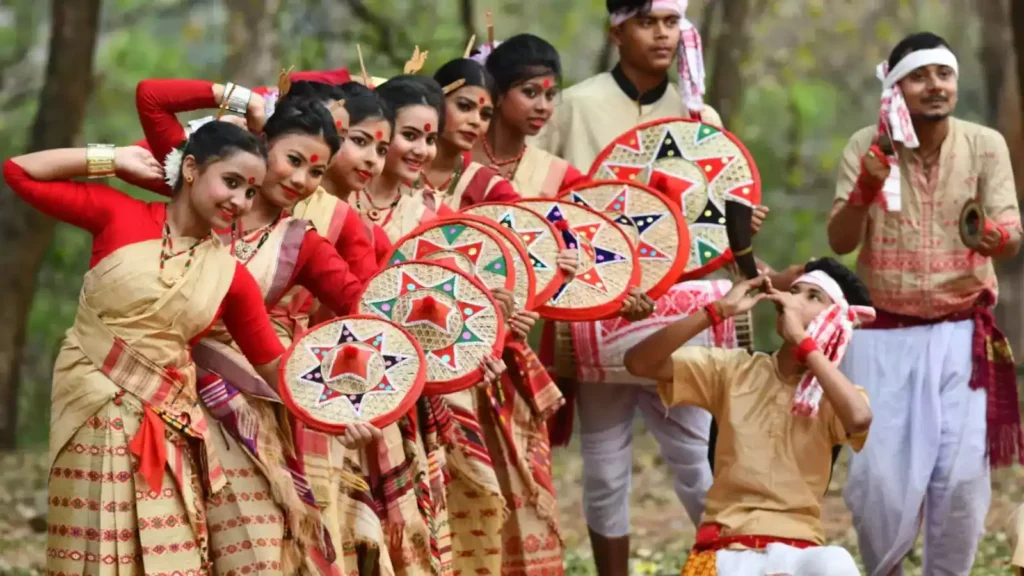
What you will see:
- Traditional dance performances
- Community feasts
- Cultural fairs (Bihu Melas)
- Folk music and celebrations
Cultural Importance of Bohag Bihu
Bohag Bihu reflects:
- Harmony between humans and nature
- Importance of agriculture
- Rich Assamese traditions
It unites people across communities and is considered a festival of joy, love, and renewal.
Spiritual & Social Benefits
Celebrating Bohag Bihu is believed to:
- Bring prosperity and happiness
- Strengthen family bonds
- Promote positivity and cultural pride
- Encourage gratitude toward nature
Significance of Bohag Bihu
Bohag Bihu marks the arrival of the harvest season and the beginning of spring. It is a time of joy, music, food, and togetherness.
People celebrate the Assamese New Year with great enthusiasm by singing traditional songs, enjoying festive meals, and performing the energetic Bihu dance.
The festival lasts for about seven days, each filled with unique traditions. On this occasion people wake up early, take a bath using a paste made of raw turmeric and urad dal, wear new clothes and seek blessings from elders.
The day usually begins with jalpan, a light and traditional breakfast made of sticky rice, curd, and jaggery.
Seven Phases of Bohag Bihu
Bohag Bihu is celebrated in different stages, each with its own importance and rituals:
Raati Bihu
This begins on the first night of the Chot month. People gather in open spaces or under trees, where celebrations take place with music, dance, and traditional performances under the light of torches.
Chot Bihu
Observed on the second day of the Chot month, this phase is filled with Bihu songs and dances, creating a lively and festive atmosphere.
Goru Bihu
This day is dedicated to cattle, which are very important in farming. Animals are bathed, decorated, and cared for as a sign of gratitude.
Manuh Bihu
This marks the first day of the Vaisakh month. People wear new clothes and seek blessings from elders, showing respect and strengthening family bonds.
Kutum Bihu
On this day, people visit relatives and friends. Families come together to enjoy delicious meals and celebrate relationships.
Mela Bihu
This phase is known for fairs and cultural events. People participate in competitions, games, and enjoy traditional performances.
Chera Bihu
Also called Bohagi Bidai, this is the final day of the festival. It marks the conclusion of celebrations and people reflect on the future with new hopes and resolutions.
How Bohag Bihu is Celebrated
Bohag Bihu is celebrated with colorful traditional attire and joyful performances. Young boys and girls dress in cultural outfits like dhoti, gamusa, and mekhela chador, and perform Bihu dance and songs that reflect Assamese heritage.
In many places, Bihu fairs (melas) are organized where people gather to enjoy games, cultural shows, and delicious Assamese food.
The entire atmosphere becomes lively, vibrant, and full of positive energy, making Bohag Bihu one of the most beautiful festivals in India.
History of Bihu Festival
The Bihu Festival is one of the oldest and most important festivals of Assam. It started many years ago as a way for farmers to celebrate the changing seasons, especially the time of planting and harvesting crops. Over time, it became a major cultural festival for the people of Assam.
Bihu has its roots in the traditions of local communities like the Bodo and Kachari. These groups celebrated nature, farming, and life through songs, dances and simple rituals. These traditions slowly developed into the Bihu festival we see today.
There are three types of Bihu – Rongali (Bohag Bihu), Magh Bihu, and Kati Bihu. Each one is connected to a different stage of farming.
Among them, Bohag Bihu is the most popular because it celebrates the New Year and the arrival of spring.
In the past, during the Ahom kingdom, Bihu became more popular and was celebrated by both common people and the royal family. Cultural programs and celebrations became an important part of the festival.
Today, Bihu is celebrated not only in Assam but also in many other places where Assamese people live. It is a festival of happiness, unity, and respect for nature.
FAQ:
Q. What is Bohag Bihu and why is it celebrated?
Bohag Bihu, also known as Rongali Bihu, is the Assamese New Year festival.
It is celebrated to welcome the spring season and mark the beginning of the agricultural cycle with joy, music, and traditional rituals.
Q. What are the 7 days of Bohag Bihu?
The festival is celebrated over seven days:
Raati, Chot, Goru, Manuh, Kutum, Mela, and Chera Bihu, each representing different traditions like worship, family bonding, cattle care, and cultural celebrations.
Q. When is Bohag Bihu 2026?
Bohag Bihu 2026 will be celebrated from 14 April to 20 April 2026 in Assam and nearby regions, with each day having its own cultural significance.
Q. How is Bohag Bihu celebrated in Assam?
Bohag Bihu is celebrated with traditional dance (Bihu dance), songs, wearing cultural clothes, feasting, and Bihu fairs (melas).
People also visit relatives, exchange greetings, and enjoy Assamese food together.
Durga Puja Live Countdown:
 Join Now