

Makar Sankranti is one of the most important and widely celebrated festivals in India. It marks the end of the winter solstice and the beginning of longer days.
People across different states celebrate this day with various names and traditions, but the spirit of joy, gratitude, and togetherness remains the same.
Makar Sankranti holds deep spiritual and cosmic importance in Indian culture. It marks the beginning of Uttarayan, the period when the Sun starts its northward journey in the celestial sphere.
This movement is considered highly auspicious, as it represents progress, enlightenment, and spiritual awakening.
 Join Now
Makar Sankranti 2026 Date and Timings
Makar Sankranti will be celebrated on Wednesday, 14th January, 2026
Makar Sankranti Punya Kaal Muhurta: 03:13 PM to 05:45 PM, 14th January, Wednesday
Duration: 2 Hours 32 Minutes
Makar Sankranti Maha Punya Kaal Muhurta: 03:13 PM to 04:58 PM, 14th January, Wednesday
Duration: 1 Hour 45 Minutes

Every year, the date of this festival remains almost the same as it is based on the solar calendar.
On this day, the Sun moves from the zodiac sign Sagittarius (Dhanu Rashi) to Capricorn (Makar Rashi), marking the beginning of the auspicious period known as Uttarayan.
The Meaning Behind Makar Sankranti
The word “Makar” refers to Capricorn, and “Sankranti” means the movement or transition of the Sun from one zodiac to another.
Therefore, Makar Sankranti signifies the Sun’s transition into Capricorn, which symbolizes new beginnings, prosperity, and light.
It is also considered a harvest festival, as it comes at the time when farmers reap their crops and thank the Sun for a good harvest season.
Makar Sankranti Rituals
Makar Sankranti is celebrated in different ways across India, but a few customs remain common everywhere:
Taking a Holy Dip
Devotees take a bath in sacred rivers like the Ganga, Yamuna, or Godavari. It is believed that bathing on this day washes away sins and brings blessings.
Offering Prayers to the Sun
People wake up early and offer Arghya (water) to the Sun God as a sign of gratitude.
Charity and Donation
Giving food, clothes, and grains to the needy is considered highly auspicious on this day.
Delicious Sweets
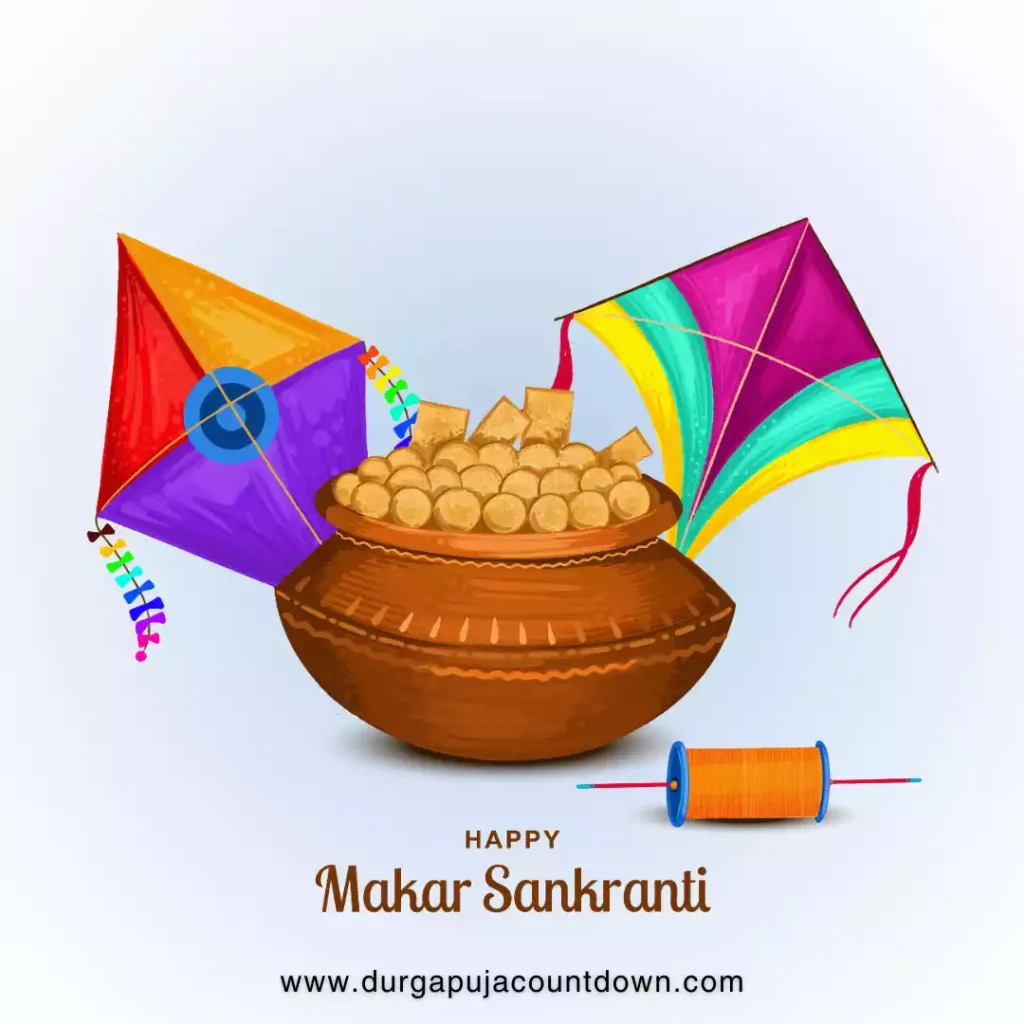
Special dishes made of sesame seeds (til) and jaggery (gur) are prepared, such as tilgul, gajak, and chikki. These symbolize unity and sweetness in relationships.
People Fly Colourful Kites
In many parts of India, especially Gujarat, Rajasthan and few parts of West Bengal, people celebrate by flying colorful kites that fill the sky, symbolizing freedom and happiness.
Regional Celebrations
Makar Sankranti is known by different names and celebrated uniquely across the country:
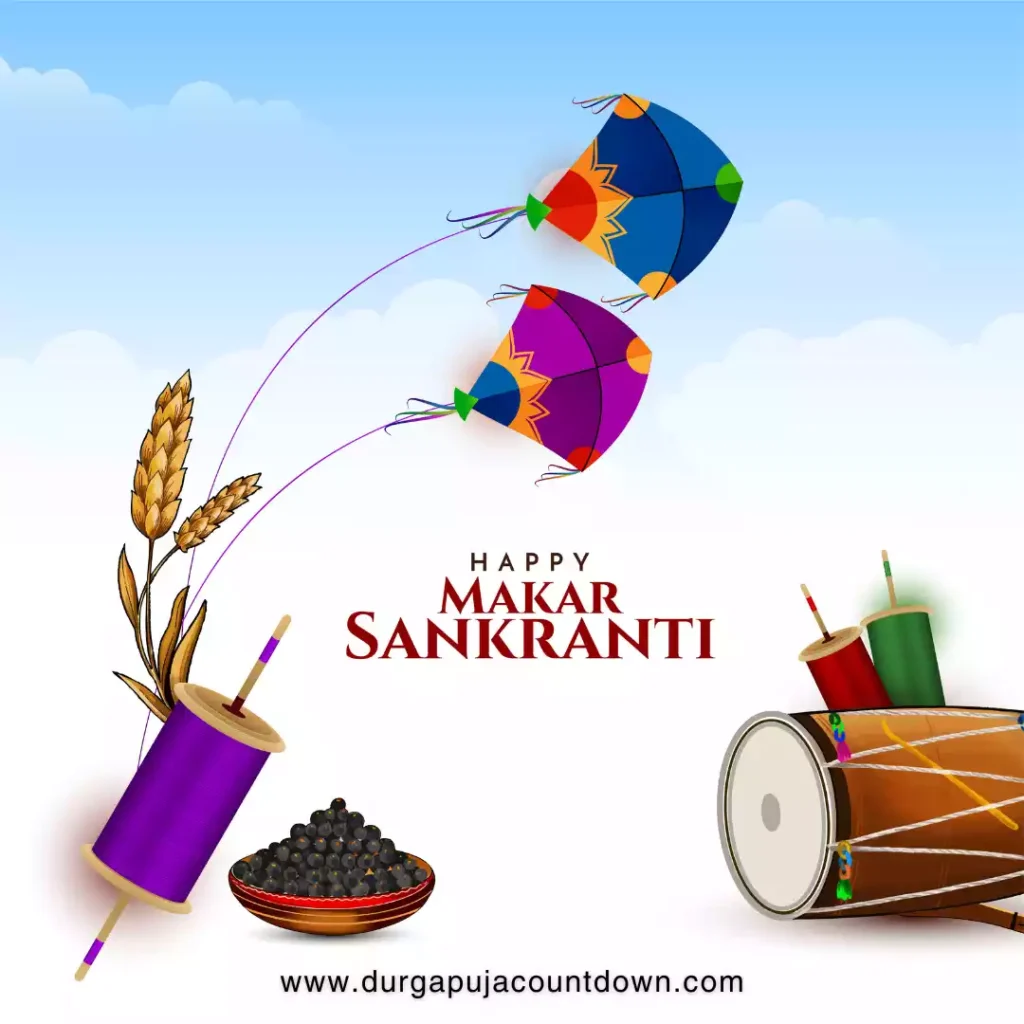
Poush Sankranti in West Bengal – Celebrated with holy dips in rivers, traditional fairs like the Ganga Sagar Mela, and the preparation of sweet rice cakes called Pitha-Puli made from date palm jaggery and freshly harvested rice.
- Pongal in Tamil Nadu – A four-day harvest festival dedicated to the Sun God.
- Uttarayan in Gujarat – Famous for its grand kite-flying tradition.
- Magh Bihu in Assam – Celebrated with bonfires, feasts, and traditional songs.
- Lohri in Punjab – Marked with bonfires, dancing, and sharing of sweets.
- Khichdi Parv in Uttar Pradesh and Bihar – People prepare khichdi and offer it to the poor and priests.
Spiritual Significance of Makar Sankranti
Makar Sankranti holds deep spiritual and cosmic importance in Indian culture. It marks the beginning of Uttarayan, the period when the Sun starts its northward journey in the celestial sphere.
This movement is considered highly auspicious, as it represents progress, enlightenment, and spiritual awakening.
It is believed that during Uttarayan, the Sun’s rays carry positive and purifying energy, which helps to remove negativity and bring peace to the soul.
The festival teaches people to move from darkness toward light, both in a physical and spiritual sense — symbolizing the victory of wisdom over ignorance and truth over illusion.
According to ancient Hindu scriptures, Makar Sankranti is also the time when the doors of heaven are opened, allowing souls to attain liberation (moksha).
The festival also encourages the practice of charity (daan), as giving to others during this time is said to cleanse one’s karma and attract divine blessings.
On a deeper level, Makar Sankranti reminds us of the importance of balance in life – just as the Sun transitions into a new phase. It begins a new journey filled with hope, discipline, and positive energy.
Makar Sankranti Celebration in West Bengal
In West Bengal, Makar Sankranti is celebrated with great devotion, joy, and a strong connection to nature and tradition. It is popularly known as Poush Sankranti.
It falls on the last day of the Bengali month Poush. This day marks the end of the winter harvest season and is celebrated as a time of gratitude to Mother Earth for a successful crop yield.
Religious and Cultural Significance
In Bengal, Makar Sankranti holds both religious and cultural importance. People take early morning holy baths in rivers such as the Ganga, Damodar, and Hooghly. The people believe that it purifies the soul and washes away sins.
The famous Ganga Sagar Mela is held at Sagar Island, where the Ganga meets the Bay of Bengal. Thousands of devotees gather there to take a holy dip and offer prayers to Lord Surya (the Sun God) and Kapil Muni.
Celebration of Makar Sankranti
Even in today’s busy world, Makar Sankranti continues to unite people. Families gather to prepare festive meals, exchange greetings, and enjoy community events.
It is also a reminder to be thankful for nature’s blessings and to share joy with others.
Durga Puja Countdown is on Live
Trending FAQs:
Q. Why is Makar Sankranti celebrated?
It marks the Sun’s transition into Capricorn and the beginning of longer days, symbolizing light, prosperity and new beginnings.
Q. What are the main traditions of Makar Sankranti?
Common traditions include taking a holy dip, offering prayers to the Sun, preparing sweets made of sesame and jaggery, donating to the poor, and flying kites.
Q. What foods are prepared during Makar Sankranti?
Traditional dishes include tilgul, chikki, pongal, khichdi, and gajak, all made from sesame seeds, jaggery, and other winter ingredients.
Q. Is Makar Sankranti the same as Pongal or Lohri?
Yes, they are celebrated around the same time with different names and customs in various regions, all marking the harvest season and the Sun’s transition.