
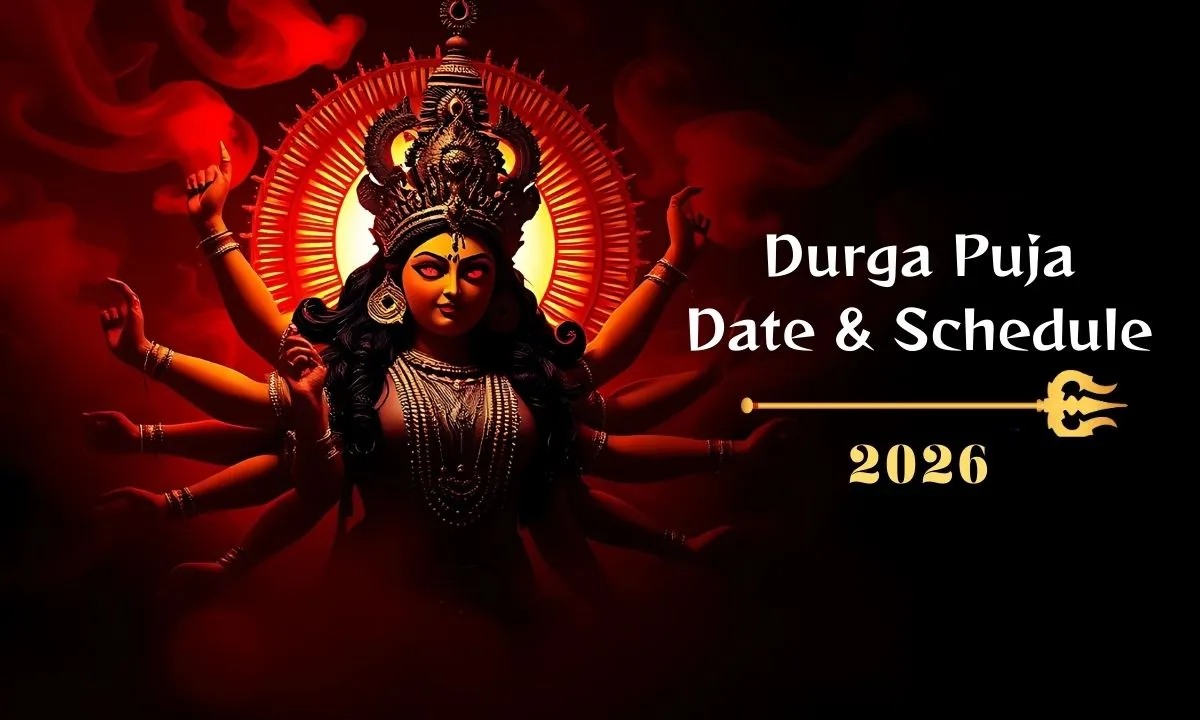
Durga Puja 2026 is one of the most important festivals in India, especially in West Bengal, Odisha and other states. It celebrates the victory of Goddess Durga over the demon Mahishasura, symbolizing the triumph of good over evil. It celebrates the victory of Goddess Durga over the demon Mahishasura.
During Durga Puja, beautiful pandals and idols of Goddess Durga attract millions of visitors. People wear new clothes, enjoy delicious food, visit pandals with family and friends, and take part in cultural programs.
Durga Puja brings happiness, love, and unity into our lives. It is not just a festival; it is an emotion for millions of people.
In 2026, Durga Puja will be celebrated from 17th October 2026 to 21st October 2026.
What is Durga Puja?
Durga Puja is a major Hindu festival dedicated to Goddess Durga. It symbolizes the triumph of good over evil. The festival lasts for ten days, but the last five days are the most important.

People celebrate with great enthusiasm. They build beautiful pandals (temporary temples) and worship the goddess. Families come together, wear new clothes, and enjoy festive food.
Durga Puja 2026 Dates
Here is a simple calendar view of the key dates for Durga Puja in 2026:
| Date | Day | Occasion |
|---|---|---|
| 10th October | Saturday | Mahalaya |
| 17th October | Saturday | Maha Shashthi |
| 18th October | Sunday | Maha Saptami |
| 19th October | Monday | Maha Ashtami |
| 20th October | Tuesday | Maha Navami |
| 21st October | Wednesday | Vijaya Dashami |
Detailed Schedule and Rituals
Mahalaya – 10th October (Saturday)
Mahalaya marks the beginning of the Durga Puja festival. On this day, people pay homage to their ancestors and listen to the “Chandi Path” early in the morning. It is believed that Goddess Durga begins her journey to Earth on this day.
The countdown begins as devotees wake up before dawn to listen to Mahishasura Mardini, marking the symbolic end of Pitru Paksha and the awakening of Goddess Durga, setting the stage for her arrival.
Maha Shashthi – 17th October (Saturday)
The main festivities start on Shashthi. On this day, the idols of Goddess Durga are unveiled, and rituals like “Bodhon” are performed to welcome the goddess.
This is when the big pandal doors finally open up. You can hear the loud beats of the dhak (drums) echoing everywhere, and you instantly know the festival has officially started.
Maha Saptami – 18th October (Sunday)
On Saptami, the “Nabapatrika” ritual is performed, where nine plants are tied together and bathed, symbolizing the nine forms of Goddess Durga. These are then placed beside the idol of the goddess.
The main pujas kick off today. Early in the morning, people take the Kola Bou (plantain tree) for a holy bath, and the idols are officially unveiled for everyone to see and worship.
Maha Ashtami – 19th October (Monday)
This is usually everyone’s favorite day. People dress up in their best traditional clothes to offer Pushpanjali (flowers) in the morning. By evening, the mood gets super lively with the thrilling Dhunuchi Naach during Sandhi Puja.
Ashtami is considered the most significant day of Durga Puja. Devotees perform “Kumari Puja,” where a young girl is worshipped as the goddess.
The “Sandhi Puja” is also performed at the juncture of Ashtami and Navami, marking the moment when Goddess Durga transformed into Chamunda to kill the demons Chanda and Munda.
Maha Navami – 20th October (Tuesday)
Navami begins with the conclusion of Sandhi Puja. Devotees perform the “Maha Aarti,” and many participate in “Dhunuchi” dance competitions, where they dance with incense burners in front of the goddess.
The final full day of pandal-hopping. Streets are packed with people checking out all the amazing lights, art, and eating delicious street food before the celebrations start winding down.
Vijaya Dashami – 21st October (Wednesday)
Dashami marks the end of Durga Puja. On this day, the idols are immersed in rivers or other bodies of water, symbolizing the goddess’s return to her heavenly abode.
Women participate in “Sindoor Khela” where they smear each other with red vermilion powder, bidding farewell to the goddess.

If you are living abroad and trying to figure out when to catch the live aaratis or stream rituals from home without messing up your sleep schedule, you can check out this handy Durga Puja Time Zone Converter tool to keep track of all the timings easily.
Durga Puja Rituals
Each day of Durga Puja is filled with special rituals that hold deep spiritual meaning. People, especially in Bengali communities, worship Mahishasur Mardini, a fierce form of Goddess Durga, during this holy time.
Every day, priests offer prayers, flowers, fruits, and sweets to the goddess. One of the most important parts of the celebration is called Pushpanjali. During this ritual, devotees offer flowers to the goddess while chanting sacred mantras.
Another meaningful act of devotion is aarti, where people move lit lamps in circles in front of the goddess, asking for blessings and protection.
- Mahalaya: Start of the festival, paying homage to ancestors.
- Shashthi: Unveiling of the goddess’s idol.
- Saptami: Nabapatrika ritual with nine plants.
- Ashtami: Kumari Puja and Sandhi Puja.
- Navami: Maha Aarti and Dhunuchi dance.
- Dashami: Idol immersion and Sindoor Khela.
A very special moment in the festival is the Sandhi Puja, which happens at the exact time between Ashtami (eighth day) and Navami (ninth day). It is believed that Maa Durga defeated the demon Mahishasura during this moment. The atmosphere during Sandhi Puja is powerful, as it feels like the whole city is praying together.
How Many Days for Durga Puja 2026 Left
We eagerly wait all year for Durga Puja. Durga Puja is the most beloved festival in our hearts. We are always wondering when it will finally arrive. So, let’s find out how many more days we have to wait for Durga Puja!
Durga Puja Live Countdown – Live
Celebrations Across India
While Durga Puja is most prominent in West Bengal, it is also celebrated with great enthusiasm in other states like Assam, Odisha, Tripura, and Bihar. Each region has its unique customs and traditions but the essence of the festival remains the same: celebrating the power and victory of Goddess Durga.
In India:
- West Bengal (Kolkata is famous for grand celebrations)
- Assam (Known for traditional pujas)
- Odisha (Celebrated with local customs)
- Bihar (People worship with devotion)
- Delhi (Big pandals in CR Park)
- Maharashtra (Celebrated by Bengali communities)
Outside India:
- Bangladesh (Huge celebrations in Dhaka)
- Nepal (Known as Dashain)
- USA (Indian communities organize events)
- UK (Grand pujas in London)
Tips for Celebrating Durga Puja
- Visit Pandal Hoppings: Explore beautifully decorated pandals showcasing artistic themes.
- Participate in Rituals: Join the daily rituals and aartis to feel spiritually connected.
- Enjoy Cultural Programs: Attend dance, music, and drama performances organized during the festival.
- Savor Traditional Foods: Relish dishes like Bhog Khichuri, Shorshe Ilish, and Mishti Doi.
- Dress Traditionally: Wear traditional attire to immerse yourself in the festive spirit.
The Heart and Soul of Durga Puja
The Magic of Pandal Hopping
There is nothing quite like walking through the streets at night during Puja. Even if your feet hurt from walking for hours, the stunning lights, the huge and creative themes of the pandals and the smell of street food like egg rolls keep you going. You just want to see one more pandal before heading home.
The Sound of the Dhak
You know Durga Puja has truly arrived the moment you hear the deep, rhythmic beat of the dhak.
That sound just hits different it is instantly brings back childhood memories, gets your heart pumping, and makes you want to drop everything and run straight to the nearest pandal.
New Clothes and Family Time
For months, people plan what they are going to wear on each day of the Puja. Putting on brand new traditional clothes, meeting up with old friends you have not seen all year. Not only that we are eating way too many sweets with family is what makes these few days feel so magical and special.
The Bhog Feast
Standing in a long line at the community kitchen just to get a plate of hot khichuri, mixed veg and sweet tomato chutney feels like a ritual in itself.
Eating it off a disposable sal-leaf plate with everyone sitting together on the floor somehow makes simple food taste like a royal feast.
Durga Puja 2025, 2026, 2027
FAQ:
Q. How many days does Durga Puja last?
While the grand public celebration officially spans six days – from Mahalaya to Dashami, the core rituals and main festivities take place over four days, starting from Shashthi through Dashami.
Q. What is the significance of Mahalaya?
Mahalaya marks the end of Pitru Paksha and the official countdown to Durga Puja. It is famous for the pre-dawn radio broadcast of Mahishasura Mardini, symbolizing the descent of Goddess Durga to Earth.
Q. What happens on Maha Ashtami?
Ashtami is considered one of the most sacred days of the festival. Devotees wake up early to offer Pushpanjali (floral prayers) and gather in the evening for the intense Sandhi Puja and energetic Dhunuchi Naach.
Q. How do people celebrate Dashami?
Dashami is an emotional day when married women participate in Sindoor Khela before the idols are taken out for Visarjan (immersion) in the water. Afterward, families visit each other to share sweet treats and exchange Shubho Bijoya greetings.
Q. How can I keep track of Puja timings if I live in a different country?
If you are living abroad and want to sync up with live aaratis or rituals back home, you can easily manage time zone differences using the Durga Puja Time Zone Converter tool.
Durga Puja Live Countdown – View
1 thought on “Durga Puja 2026 Dates, Rituals and Celebrations”